

The first time a small curved glass lands on your table, half full of something the color of amber, there is usually a pause. Turkish tea culture answers most of the questions that pause creates, and none of the answers are complicated. The glass is small on purpose, the tea is strong on purpose, and the refill is coming whether you asked or not.
This is not a fussy ceremony. Turkish tea culture is closer to a habit that a whole country never gave up, and it survives in kitchens, ferries, barber shops and cafes without any effort at all.
What Cay Actually Means in Turkish Tea Culture
Start with the word. The cay meaning is simply tea, pronounced roughly like chai, and it covers the black tea that gets brewed all day in homes, shops and cafes. No spices, no milk, no ceremony master. Just leaves, water and patience. The cay meaning most dictionaries give you leaves out the social part, which is the part that matters.
Turkey sits at the top of global tea consumption per person, somewhere around three kilograms a year according to industry data, which is several times what most European countries manage. That number makes more sense once you notice how many glasses fit into a single afternoon.
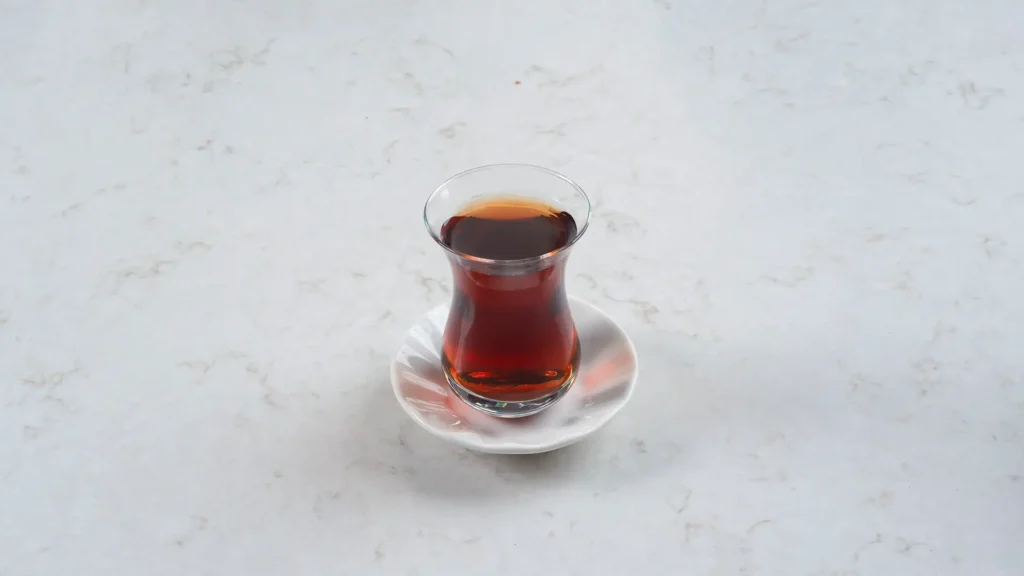
The Tulip Shaped Tea Glass
The tulip shaped tea glass is the signature object of this whole tradition. It pinches in at the waist and flares at the rim, which is not just decoration.
Function Hiding Inside a Pretty Shape
That narrow waist keeps the top of the tea hotter while the bottom cools, so you can hold it by the rim without burning your fingers. The clear glass also lets you judge the color, and color is how people judge strength here. Deep mahogany with a hint of red is the target, often called rabbit blood red, which sounds dramatic but describes it perfectly.
Ceramic mugs hide all of that. Turkish tea culture leans on sight almost as much as taste, so the glass stays glass, no matter how many trends come and go.
How the Tea Is Brewed
A caydanlik is a stacked double teapot. Water boils in the bottom chamber, loose leaves steep in the top chamber with a small amount of that water, and the steam keeps the concentrate warm for hours without scorching it.
When someone asks how to drink turkish tea, the real answer starts with this pot. You are served concentrate plus hot water, mixed to your preference, which is why nobody ever asks if you want it strong or weak. You control it in the glass.
Ordering It the Way Locals Do
Three words cover almost every situation. Koyu means dark and strong, acik means light, and orta lands in the middle. Sugar goes in as cubes, dropped in and stirred with a tiny spoon that makes far too much noise. Milk is never added, honestly it would feel wrong to most people at the table.
Learning how to drink turkish tea also means learning to slow down. One glass is maybe six or seven sips. Refills arrive constantly, and turning down the second glass is the polite way to signal you are finished.

Turkish Tea vs Black Tea From a Supermarket Box
The turkish tea vs black tea comparison confuses a lot of people, because technically they are the same plant. The difference is grade, cut and brewing method.
Turkish leaves are cut small and brewed as a concentrate for fifteen to twenty minutes, which pulls out a stronger, more tannic body than a three minute teabag ever could. Then you dilute it back down. That two step approach gives a cleaner, rounder cup than simply steeping a bag until it turns bitter.
A supermarket teabag brewed strong just tastes harsh. Turkish tea vs black tea is really concentrate versus infusion, and the concentrate wins on flexibility.
Rize Tea and Where the Leaves Grow
Nearly all of it comes from one place. Rize tea grows on the steep, rainy hills of the eastern Black Sea coast, where the climate is humid enough that the bushes rarely need irrigation.
The region only started planting tea seriously in the 1940s, which makes this tradition younger than most visitors assume. Under a century old, and already impossible to separate from daily life. Rize tea is also picked by hand on slopes too steep for machines, and that labor shows up in the price of good grades.
Caffeine, Sleep and How Many Glasses Is Too Many
Every guest eventually asks about caffeine in turkish tea. A single small glass carries roughly 25 to 40 milligrams, so about half a cup of drip coffee, sometimes less depending on the steep.
Because the glasses are small, four of them across an afternoon is not the caffeine bomb it looks like. Still, the caffeine in turkish tea adds up if you are matching a local at their own pace, and evening glasses are common enough that many people simply build a tolerance.
- Light brew, later in the day, if sleep matters to you.
- Dark brew in the morning, when it does the same job as espresso.
Tea With Breakfast Is Not Optional
A tea with breakfast turkish households treat as standard is not a beverage choice, it is part of the table setting. Cheese, olives, tomatoes, warm bread and jam all sit better with something bitter and hot cutting through them.

Why It Works With Salty Food
Tannins strip fat and salt off your palate between bites. That is the practical reason the same glass keeps showing up next to breakfast spreads, next to baklava and next to grilled meat. The tea with breakfast turkish routine keeps everything tasting sharp instead of heavy.
Coffee comes later, usually after the meal, in much smaller amounts. The two drinks were never in competition, and turkish tea culture happily makes room for both.
Bringing the Ritual Into a Cafe
Plenty of cafes serve tea in mugs and call it a day. Places that care keep the caydanlik going and pour into proper glassware, because the shape genuinely changes the experience. At Moda Cafe the pot stays on through the whole breakfast service for exactly that reason.
If you want to try it properly, order tea with something salty first, then something sweet, and notice how differently the same glass tastes across the meal. Turkish tea culture is easiest to understand from the inside of a meal, not from a description of it.
A Short Answer for the Impatient
Small glass, strong concentrate, hot water, no milk, endless refills. The tulip shape keeps your fingers safe and your eyes honest about the color. Turkish tea culture is really just that, repeated a few million times a day, and it holds up beautifully once you stop treating the glass as too small.