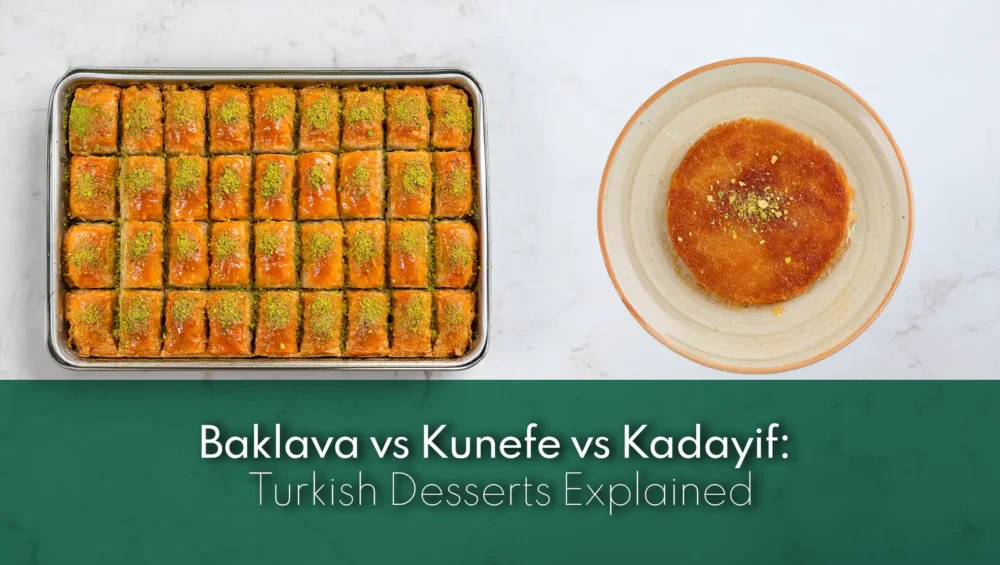
Standing in front of a bakery counter full of golden, syrup soaked trays is a small kind of panic. This guide keeps things simple, because turkish desserts explained in plain language is far more useful than a menu full of names nobody can pronounce yet. Three desserts dominate that counter, and once the difference clicks, ordering becomes easy forever.
They look related. They kind of are. But the texture, the temperature and the moment you should eat them are completely different.
The Family Tree Behind the Tray
Almost every classic Turkish sweet starts from one of two doughs. There is yufka, the tissue thin sheet that most people know as filo, and there is tel kadayif, which looks like a nest of pale shredded noodles. Butter and syrup do the rest of the work.
That shared DNA is why a phyllo dough dessert can taste rich and crisp while its cousin tastes chewy and stretchy. Same pantry, different engineering. Any phyllo dough dessert lives or dies on how thin those sheets were rolled.
Global interest in this category has grown fast. Tastewise reported that shredded filo based desserts jumped 298 percent in social mentions heading into 2026, which explains why so many bakeries suddenly added a kadayif tray to the case. Middle Eastern technique became a bakery trend without asking permission.
Baklava: The Crisp One
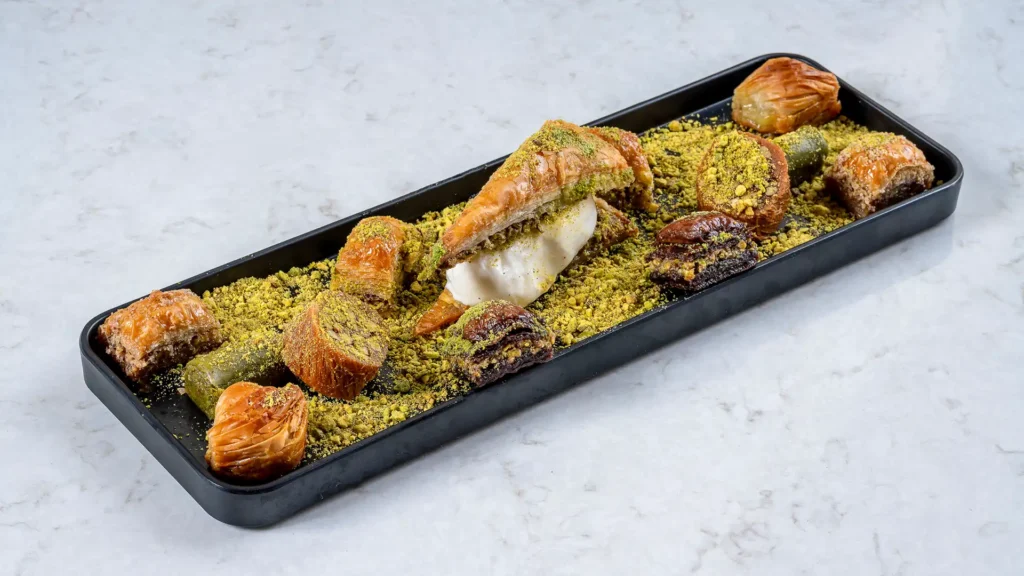
Baklava is layers. Dozens of them, brushed with butter, packed with ground nuts, baked until the top shatters when a fork touches it, then finished with syrup while still warm.
A good tray has a specific sound. If it goes quiet and soggy under the fork, the syrup was poured wrong or the pastry sat too long.
How to Spot a Good Piece
The classic version in most bakeries here is pistachio baklava, which uses Antep pistachios ground fine and packed thick between the sheets. Walnut versions exist too and taste earthier, a little more old fashioned in the best way. If the nut layer looks thin and the syrup pools at the bottom of the tray, walk away.
Baklava keeps well at room temperature for a couple of days. It hates the fridge. Cold turns the butter waxy and kills the crunch that somebody worked hours to build.
Kunefe: The Hot One With Cheese
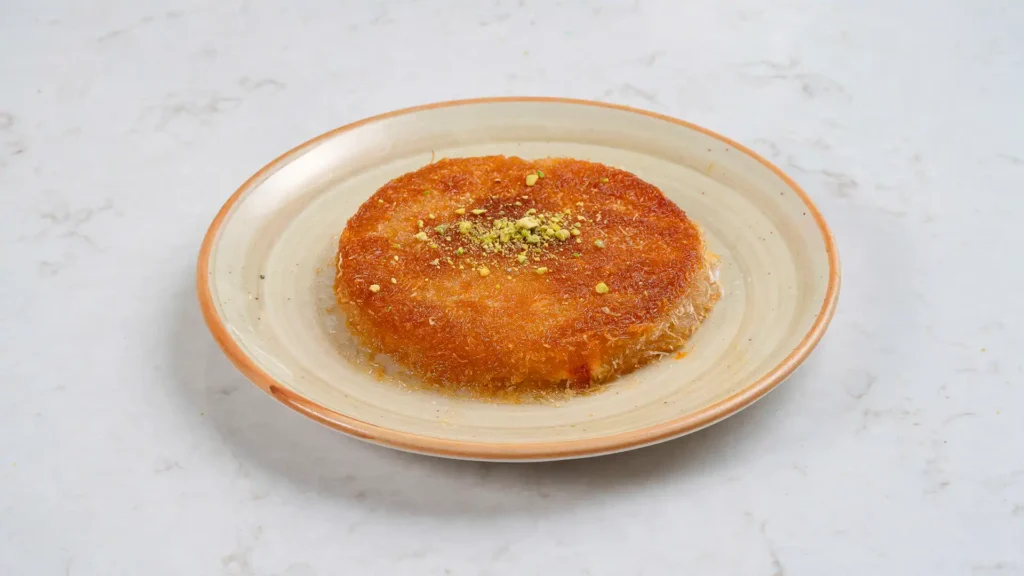
So, what is kunefe exactly? It is shredded kadayif dough packed around a layer of mild, unsalted stretchy cheese, baked or pan cooked in butter until both sides turn deep orange, then soaked in syrup and served immediately with crushed pistachio on top.
It is the only dessert on this list that must arrive hot. Not warm. Hot.
That cheese layer is the whole point. Pull a spoon away and it stretches like a small edible bridge, which is exactly why every table takes a video of it. A dessert with cheese inside sounds strange to a lot of first timers, but the cheese is not sweet and not salty, it just adds a soft, milky chew against the crisp shell.
Sweet and Savory at Once
The balance is what makes it addictive. Syrup on the outside, mild dairy in the middle, butter everywhere. If you already love a salted caramel or a cheese danish, kunefe is not a leap at all.
Kadayif: The Chewy Middle Ground
A plain kadayif dessert skips the cheese and leans on nuts instead. The shredded strands are pressed into a pan with butter, layered with walnuts or pistachio, baked, then soaked. The result is chewier than baklava and far less delicate.
There is also the rolled version, sometimes called dolma kadayif, where the strands wrap around the nut filling like a little log. A rolled kadayif dessert is the same flavor family, just easier to eat with one hand.
Baklava vs Kunefe: The Quick Decision
Here is the honest comparison. The baklava vs kunefe question really comes down to timing and temperature more than flavor.
- Choose baklava when you want something crisp, portable, shareable with a group, and fine to take home in a box.
- Choose kunefe when you are sitting down, you have twenty minutes, and you want a dessert that feels like an event.
Neither is heavier than the other by much, though kunefe feels richer because of the dairy. Baklava is sweeter per bite. Kunefe is warmer per bite. That is the whole argument.
So What Is the Best Turkish Dessert?
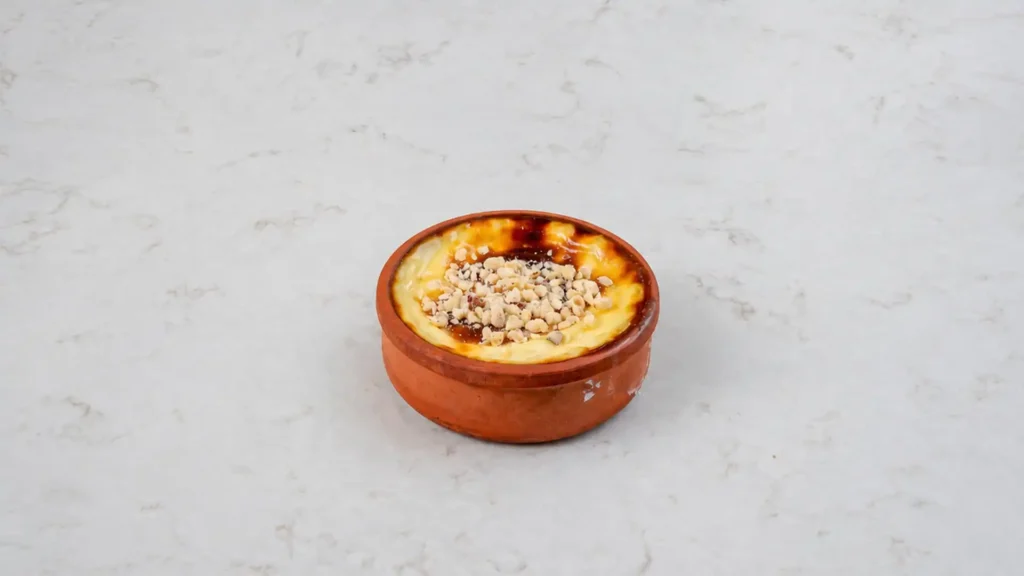
Nobody agrees, and that is part of the fun. Ask ten people for the best turkish dessert and you get baklava, kunefe, sutlac, revani and an argument about which city does it properly.
For a first visit, a reasonable order looks like this. One portion of kunefe for the table, one small box of baklava to take home, and Turkish tea or coffee alongside. The tea is not optional, honestly. Syrup desserts and unsweetened tea were designed for each other, and the bitterness resets your palate between bites.
Portion Sizes Are Smaller Than You Think
These sweets are rich, so a piece the size of a matchbox is a full serving. That fits the wider dessert shift too. A 2026 patisserie report from Puratos found 63 percent of consumers now prefer smaller portions rather than compromising on flavor, and syrup desserts have worked that way for centuries already.
Two pieces of baklava with strong coffee will satisfy most people. Four pieces will make you regret dinner.
Common Questions People Ask Before Ordering
Is baklava vegan? Usually no, since butter is central to the layering. Is kunefe gluten free? Also no, both doughs are wheat based. Can these be made less sweet? A little, some bakeries pull back the syrup, but a completely unsweetened version stops being the same dessert.
Nut allergies matter here more than anywhere else on a Turkish menu. Pistachio baklava in particular is built around the nut, and even the plain looking trays usually share an oven with it.
Another regular question is what is kunefe made of when a place calls it kadayif with cheese. It is the same thing under a different name, and yes, a dessert with cheese inside really is meant to taste that way.
A Small Note on Freshness
Syrup desserts are made in batches, usually early, and the good ones sell out. Late evening trays are still tasty but the texture has softened. Morning and early afternoon is when the crunch is at its peak, which is the quiet reason regulars at Moda Cafe show up before the after dinner rush.
Ask what came out of the oven that day. Bakers love that question more than any other, and the answer usually tells you what to order.
Turkish Desserts Explained in One Order
Crisp and portable, that is baklava. Hot, stretchy and dramatic, that is kunefe. Chewy and nutty in the middle, that is kadayif. Once you have got those three anchors, every other name on the tray starts making sense, and turkish desserts explained this way stop feeling intimidating.
Bring somebody with you. These desserts taste better split, and the argument about which one wins is honestly half the experience.