

Two small cups, both dark, both strong, both finished in a few sips. Turkish coffee vs espresso is the comparison that comes up at almost every counter, usually right before somebody assumes they are basically the same thing. They are not, and the gap starts before the water ever touches the grounds.
One is filtered under pressure in twenty five seconds. The other simmers slowly and never gets filtered at all, and that single difference drives almost every turkish coffee vs espresso argument that follows.
The Grind Tells You Everything
Everything about turkish coffee vs espresso follows from coffee grind size. Espresso is ground fine, roughly like table salt, fine enough to resist nine bars of pressure for a short extraction.

Turkish coffee is ground to powder. Actual powder, finer than flour in a good mill, so fine it clumps when you rub it between your fingers. No espresso grinder can reach it, which is why traditional shops keep a separate mill just for this.
That coffee grind size difference is not a detail. It changes the body, the texture, and whether the grounds can be separated from the drink at all.
Turkish Coffee vs Espresso in the Cup: Two Brew Methods
Espresso
Hot water, high pressure, thirty seconds, a paper thin layer of crema on top. The puck of spent grounds gets knocked out and the cup stays clean.

Cezve
Cezve brewing is the opposite of pressure. Powder, cold water and sugar go into a small long handled pot together, then the whole thing heats slowly until foam rises to the rim.
It never boils properly. The pot comes off the heat right as it climbs, sometimes twice, then everything gets poured into the cup, grounds included. Cezve brewing takes three or four minutes and rewards patience more than equipment.
Unfiltered Coffee and the Sludge at the Bottom
That layer at the bottom of the cup surprises people every single time. Turkish coffee is unfiltered coffee, which means the finest particles stay suspended in the drink and the heavier ones settle.
You stop drinking when you reach it. That is the whole rule. Trying to finish the last centimeter is how first timers end up chewing their coffee.
Unfiltered coffee also carries more of the oils that paper filters trap, which is part of why the body feels heavier and rounder than a filter cup, even when the actual caffeine is lower.
Which One Has More Caffeine
This is the question that starts arguments. A double espresso carries roughly 60 to 80 milligrams. The caffeine in turkish coffee in a standard small serving usually lands somewhere between 50 and 65 milligrams.
So espresso wins per serving, though not by much. Per milliliter, turkish coffee vs espresso goes the other way, because a cezve cup is diluted less than most people assume.
The caffeine in turkish coffee also arrives more slowly, since you sip it over ten or fifteen minutes instead of throwing it back at a bar. Same chemical, very different curve.
The Foam Is Not Optional
Ask any Turkish grandmother and the foam on turkish coffee is how you judge whether the person brewing it knew what they were doing. A cup served flat gets sent back in some households, honestly.
That foam comes from the slow heat and the fine grind trapping air as it rises. Rushing the pot kills it. The foam on turkish coffee also carries aroma, so a cup with a proper cap smells noticeably better before the first sip.
How to Drink It Properly
How to drink turkish coffee has a small etiquette attached, and none of it is difficult.
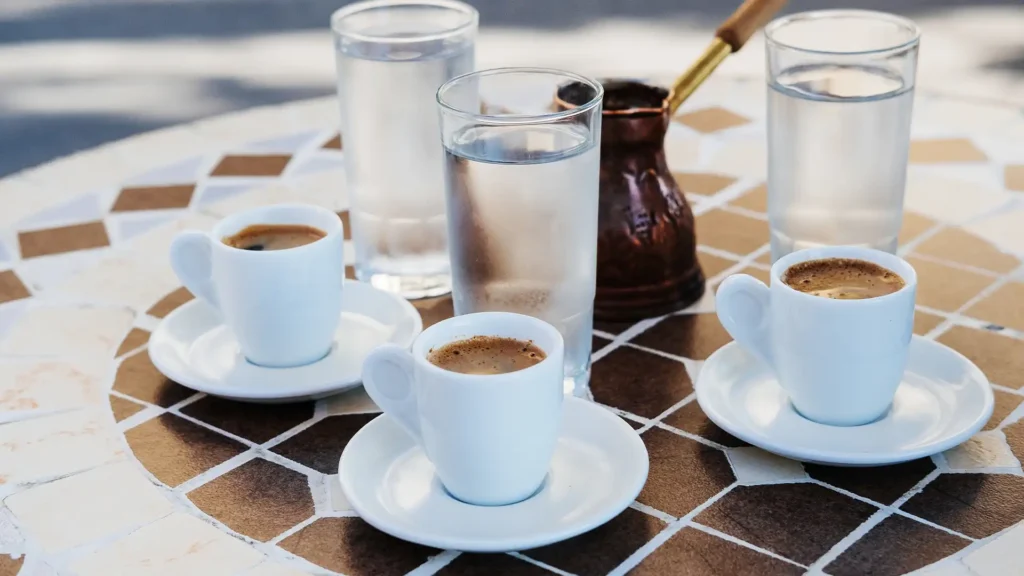
- Sip slowly, never stir once it is poured, and stop when the texture changes.
- Drink the water served alongside first, to clean your palate, then again at the end.
Sweetness is chosen before brewing, not after, which surprises everyone. Sade means no sugar, az sekerli is lightly sweet, orta is medium, cok sekerli is very sweet. Sugar goes into the pot with the water, so there is no fixing it later. Learning how to drink turkish coffee mostly means learning to decide early.
Why Water and Something Sweet Come With It
The water resets the palate. The lokum or small sweet balances the bitterness. It is a three part serving that has not changed in centuries.
The Fortune Telling Part
When the cup is empty, some people flip it onto the saucer and wait for the grounds to cool into patterns. Coffee fortune telling is a social game more than a belief system for most, though everybody has one relative who takes it seriously.
Shapes get read as roads, birds, letters, fish. Nobody agrees on the meanings. Coffee fortune telling is really an excuse to sit at the table twenty minutes longer, which might be the most honest thing about it.
Both Drinks Coexist Now
The idea that specialty coffee replaced tradition is not what actually happened. Coverage from Perfect Daily Grind in 2026 quoted roasters describing how Turkish coffee was never meant to be drunk in a rush, so espresso and filter simply became additions for different moments of the day rather than replacements.
The numbers back that up. Istanbul based Espressolab reached 400 stores globally by the end of 2025 while cezve pots kept simmering in the same neighborhoods.
Choosing Between Them
Order espresso when you are moving. Order cezve when you are staying. That is the practical version of turkish coffee vs espresso, and it is the one most people actually live by.
Cafes that take both seriously, including bakeries like Moda Cafe, will happily explain the difference at the counter. Asking is normal.
Quick Reference
Espresso is fast, pressurized, filtered by the puck, sharp and bright. Turkish coffee is slow, unpressurized, unfiltered, thick and aromatic with a foam cap on top. Espresso is a shot. Cezve is a small ritual with a sediment problem at the end.
Turkish coffee vs espresso is not a contest anybody needs to settle. They solve different problems, and most serious coffee drinkers keep both within reach.
Try the cezve version on a slow morning, with the water and the sweet on the side, and see whether the ten extra minutes feel like an inconvenience or the entire point.